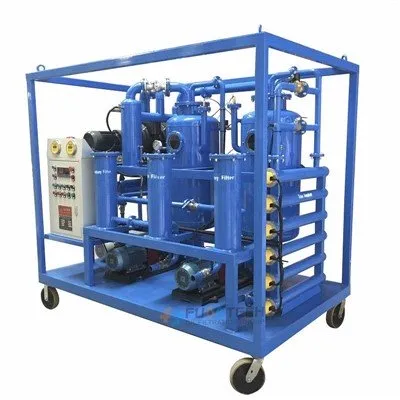

Hey there! As a supplier of transformer oil filters, I've seen a lot of situations where the flow rate through these filters can cause some real headaches. So, I thought I'd take a moment to chat about what happens if the flow rate through a transformer oil filter is too high.
First off, let's talk about why flow rate matters. Transformer oil filters are designed to remove contaminants like water, particles, and gases from the transformer oil. This is crucial because clean oil helps the transformer operate efficiently and extends its lifespan. But if the flow rate is too high, the filter might not be able to do its job properly.
One of the most immediate issues is that the filter might not be able to remove all the contaminants. When the oil rushes through the filter at a high speed, the contaminants don't have enough time to be trapped by the filter media. It's like trying to catch a baseball that's thrown at you at 100 miles per hour – it's just too fast to grab. This means that dirty oil will continue to circulate in the transformer, which can lead to all sorts of problems.
For example, water in the oil can cause electrical breakdowns. When the voltage in the transformer is high, water droplets can act as conductors, creating a path for the electricity to flow where it shouldn't. This can lead to short circuits and damage to the transformer's insulation. Over time, this can significantly reduce the transformer's lifespan and increase the risk of costly repairs or replacements.
Particles in the oil can also cause problems. They can scratch the internal components of the transformer, leading to wear and tear. This can affect the performance of the transformer and cause it to operate less efficiently. In some cases, the particles can even clog the small passages in the transformer, restricting the flow of oil and causing overheating.
Another problem with a high flow rate is that it can put extra stress on the filter itself. The filter media is designed to handle a certain amount of pressure and flow. When the flow rate is too high, the filter can become overloaded. This can cause the filter media to tear or break, allowing contaminants to pass through unfiltered. It can also lead to a decrease in the filter's overall lifespan, meaning you'll have to replace it more frequently.
Now, let's talk about how this can affect your bottom line. If your transformer isn't operating efficiently due to dirty oil, it will consume more energy. This means higher electricity bills for you. And if the transformer gets damaged due to the high flow rate and the resulting contamination, you'll have to pay for repairs or a new transformer. These costs can quickly add up, so it's important to get the flow rate right.
So, what can you do to avoid these problems? Well, the first step is to make sure you're using the right filter for your transformer. Different transformers have different requirements, so it's important to choose a filter that can handle the flow rate and the type of contaminants in your oil.
At our company, we offer a range of transformer oil filters to meet your needs. For example, our Mobile Double-stage Vacuum Transformer Oil Treatment Plant is a great option for those who need a portable and efficient solution. It uses a double-stage vacuum system to remove water, particles, and gases from the oil, ensuring that your transformer is running on clean oil.
Our Double-stage Vacuum Transformer Oil Filtration Machine is another popular choice. It's designed for high-capacity applications and can handle large volumes of oil. The double-stage vacuum process ensures that the oil is thoroughly cleaned, even at high flow rates.
And if you're looking for a more budget-friendly option, our ZY-10 600 LPH High Efficiency Single-stage Vacuum Transformer Oil Purifier is a great choice. It's a single-stage vacuum system that can still effectively remove contaminants from the oil, making it a cost-effective solution for smaller transformers.


In addition to choosing the right filter, it's also important to monitor the flow rate regularly. You can use flow meters to measure the flow rate and make adjustments as needed. If you notice that the flow rate is too high, you can reduce it by adjusting the valves or pumps in your system.
If you're not sure how to choose the right filter or how to monitor the flow rate, don't worry. Our team of experts is here to help. We have years of experience in the transformer oil filtration industry and can provide you with the advice and support you need to keep your transformer running smoothly.
So, if you're experiencing problems with your transformer oil filter or you're just looking to upgrade your system, get in touch with us. We'd love to have a chat about your needs and see how we can help. Whether you're a small business or a large industrial operation, we have the products and expertise to meet your requirements.
In conclusion, a high flow rate through a transformer oil filter can cause a lot of problems, from reduced filtration efficiency to damage to the filter and the transformer itself. But by choosing the right filter, monitoring the flow rate, and getting the right support, you can avoid these issues and keep your transformer running at its best.
References:
- Electrical Power Transformer Engineering by Turan Gönen
- Transformer Oil: Properties, Testing, and Maintenance by J. Lewis Blackburn