


A centrifugal oil filtration system is a crucial piece of equipment in various industries, especially those where the quality and purity of oil are of utmost importance. As a well - established supplier of oil filtration systems, we have received numerous inquiries about the working principle of our products. In this blog post, I will delve deep into how a centrifugal oil filtration system operates, explaining each step in detail.
1. Basic Concept of Centrifugal Force
Before exploring the working principle of the centrifugal oil filtration system, it's essential to understand the concept of centrifugal force. Centrifugal force is a force that acts on a body moving in a circular path and is directed away from the center around which the body is moving. In a centrifugal oil filtration system, this force is harnessed to separate different components within the oil based on their densities.
When a mixture of oil, along with contaminants such as water and solid particles, is spun at high speeds, the centrifugal force causes the denser substances to move towards the outer edge of the spinning chamber, while the less dense oil remains closer to the center. This separation phenomenon is the foundation upon which the entire centrifugal oil filtration process is built.
2. Inlet of the Oil Mixture
The process of a centrifugal oil filtration system starts with the inlet of the contaminated oil mixture. The oil, which may contain water droplets, solid debris, and other impurities, enters the filtration unit through a specially designed inlet port. This inlet is engineered to ensure a smooth and consistent flow of the oil into the system, preventing any sudden surges or blockages that could disrupt the filtration process.

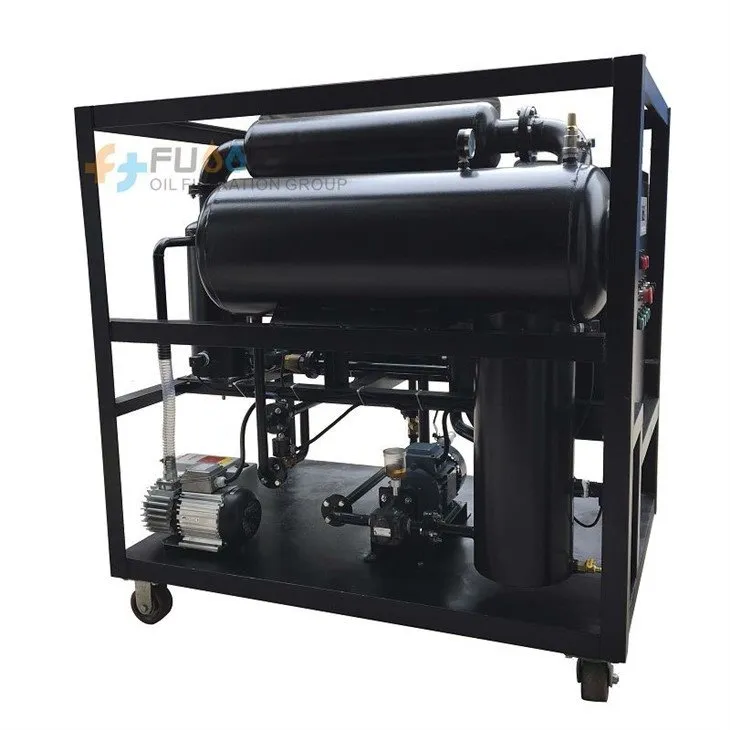
Our systems are often equipped with pre - filters at the inlet. These pre - filters are designed to capture larger particles present in the oil, such as dirt clumps and metal shavings. By removing these larger particles early in the process, the pre - filters not only protect the internal components of the centrifugal filtration system but also improve the overall efficiency of the subsequent separation steps.
3. Creation of Centrifugal Force
Once the oil mixture enters the filtration system, it is directed into a spinning chamber known as the centrifuge bowl. The centrifuge bowl is powered by a high - speed motor that rotates it at a very high angular velocity. The speed of rotation can vary depending on the specific design of the system and the properties of the oil being filtered, but it typically ranges from several thousand to tens of thousands of revolutions per minute (RPM).
As the centrifuge bowl spins, the oil and the contaminants inside it also start moving in a circular path. Due to the large angular velocity, a significant centrifugal force is generated. This force acts on each particle within the oil mixture, with the magnitude of the force on a particle depending on its mass and distance from the center of rotation.
4. Separation of Components
The generated centrifugal force causes the separation of the different components in the oil mixture. Contaminants, such as water and solid particles, are generally denser than the oil itself. As a result, they are forced towards the outer wall of the centrifuge bowl. Water, being heavier than most oils, migrates to the outermost layer along the bowl wall. Solid particles settle just adjacent to the water layer.
Meanwhile, the relatively lighter oil migrates towards the center of the spinning bowl. This separation occurs because the centrifugal force acting on the denser components is greater, causing them to move radially outward, while the less dense oil is left closer to the central axis.
5. Collection of Separated Components
After the components have been separated, the next step is to collect them. The separated oil, which is now relatively clean, is collected from the center of the centrifuge bowl through an outlet pipe. This clean oil can then be redirected back into the machinery or storage tank, ready for reuse.
On the other hand, the separated contaminants, including water and solid particles, are collected from the outer part of the centrifuge bowl. Some systems have a mechanism that allows for continuous removal of these contaminants during the operation. For example, there may be a drain valve at the bottom of the centrifuge bowl that can be opened periodically to release the accumulated water and solid debris. In other systems, the operation may need to be stopped temporarily for the manual removal of the collected contaminants.
6. Advanced Features in Our Systems
As a leading oil filtration system supplier, we have incorporated several advanced features into our centrifugal oil filtration systems to enhance their performance.
One such feature is the use of multiple - stage centrifugation. In these systems, the oil mixture undergoes centrifugation in multiple stages, with each stage further refining the separation process. This helps in achieving a higher level of purity in the filtered oil, especially when dealing with highly contaminated oil.
We also offer intelligent control systems for our centrifugal oil filtration units. These control systems can monitor various parameters such as the speed of the centrifuge bowl, the temperature of the oil, and the level of contaminants in the separated components. Based on the monitored data, the control system can automatically adjust the operating parameters of the system to optimize the filtration process.
7. Applications and Our Product Range
Centrifugal oil filtration systems have a wide range of applications across different industries. In the automotive industry, they are used to filter engine oil, ensuring the smooth operation of engines and reducing wear and tear on engine components. In the manufacturing industry, these systems are employed to filter hydraulic oil, lubricating oil, and cutting oil, maintaining the quality of these oils and extending the lifespan of machinery.
We offer a diverse range of centrifugal oil filtration products to meet the specific needs of our customers. For example, our ZY - 100 6000 L/hr Multi - function Vacuum Insulating Oil Treatment Plant is designed specifically for the treatment of insulating oil in transformers. It combines centrifugal filtration with vacuum dehydration and degassing functions, providing a comprehensive solution for maintaining the quality of transformer oil.
Our Multi - stage Vacuum Transformer Oil Regeneration System uses multi - stage centrifugation and advanced regeneration techniques to restore the performance of aged transformer oil. This system can effectively remove oxidation products, moisture, and other contaminants from the oil, extending its service life and improving the safety and reliability of transformers.
The Ultra - High Voltage Vacuum Transformer Oil Treatment Plant is another flagship product in our portfolio. It is tailored for the treatment of oil in ultra - high voltage transformers, where the requirements for oil purity are extremely high. The plant utilizes high - speed centrifugation and advanced vacuum treatment technologies to ensure that the oil meets the strict quality standards for ultra - high voltage applications.
8. Contact Us for Procurement
If you are in need of a reliable centrifugal oil filtration system for your business, we are here to assist you. Our team of experts has extensive experience in the field of oil filtration and can provide you with professional advice and customized solutions based on your specific requirements. Whether you are looking for a standard system or a bespoke solution, we can offer you high - quality products and excellent after - sales service.
Don't hesitate to reach out to us for more information about our products and to start a procurement negotiation. We are committed to helping you improve the quality of your oil and enhance the efficiency and reliability of your equipment through our advanced oil filtration systems.
References
- Smith, J. (2018). Principles of Industrial Filtration. New York: Industrial Press.
- Johnson, A. (2020). Centrifugal Separation Techniques in Oil Treatment. London: Elsevier.
- Brown, C. (2019). Advances in Oil Filtration Technology. Tokyo: Springer.


