


As a supplier of VLF Hipot Testers, I often encounter inquiries regarding the suitability of these testers for overhead line testing. In this blog, we will explore the feasibility of using a VLF Hipot Tester for overhead line testing, examining its technical aspects, advantages, limitations, and practical applications.
Technical Insights into VLF Hipot Testers
VLF (Very Low Frequency) Hipot Testers are designed to generate high - voltage, low - frequency signals for testing the insulation integrity of electrical equipment. The typical frequency range of a VLF Hipot Tester is between 0.01 Hz and 0.1 Hz, which is much lower than the standard 50 Hz or 60 Hz power frequency. This low - frequency characteristic allows for a more efficient and effective testing process, especially for large - capacitance equipment.
The basic principle behind a VLF Hipot Tester is to apply a high voltage to the insulation of the equipment under test. By measuring the leakage current, we can assess the condition of the insulation. If the insulation is in good condition, the leakage current will be within an acceptable range. However, if there are any defects or weaknesses in the insulation, the leakage current will increase, indicating potential problems.
Suitability for Overhead Lines
Overhead lines are an essential part of the power grid, transmitting electricity over long distances. Testing the insulation of overhead lines is crucial to ensure the reliability and safety of the power supply. So, can a VLF Hipot Tester be used for testing overhead lines?
Advantages
- Reduced Testing Time and Equipment Size
- Overhead lines often have large capacitances. Using a traditional power - frequency hipot tester would require a large and heavy testing equipment setup, and the testing process would be time - consuming. In contrast, a VLF Hipot Tester can generate a high - voltage test signal at a low frequency, which significantly reduces the required testing current. This allows for the use of smaller and more portable testing equipment, and the testing time can also be shortened.
- Better Detection of Insulation Defects
- The low - frequency signal of a VLF Hipot Tester can penetrate the insulation more effectively than a high - frequency signal. This means that it can better detect insulation defects such as cracks, voids, and moisture ingress in the overhead line insulation. For example, moisture in the insulation can cause a change in the dielectric properties, and the VLF Hipot Tester can detect these changes through the measurement of leakage current.
- Less Stress on the Insulation
- Applying a high - voltage test at a low frequency is less stressful on the insulation compared to a power - frequency test. This is because the low - frequency signal has a longer period, which gives the insulation more time to recover between voltage cycles. As a result, the risk of causing additional damage to the insulation during the testing process is reduced.
Limitations
- Limited Range of Application
- While VLF Hipot Testers are effective for many types of insulation testing, they may not be suitable for all overhead line conditions. For example, in some cases where the overhead line has a very complex structure or is exposed to extreme environmental conditions, the test results obtained from a VLF Hipot Tester may not accurately reflect the actual insulation condition.
- Interpretation of Test Results
- The interpretation of test results from a VLF Hipot Tester requires a certain level of expertise. The leakage current measured during the test can be affected by many factors, such as the temperature, humidity, and surface contamination of the overhead line. Therefore, it is necessary to have a comprehensive understanding of these factors to accurately interpret the test results.
Practical Applications and Case Studies
In practice, VLF Hipot Testers have been used for overhead line testing in many power systems around the world. For example, in some rural areas where the power grid is less developed, VLF Hipot Testers are used to regularly test the insulation of overhead lines to ensure the reliable operation of the power supply.

One case study involved a power company that was experiencing frequent power outages in a particular area. By using a VLF Hipot Tester to test the overhead lines in the area, the company was able to identify several insulation defects. After repairing these defects, the frequency of power outages in the area was significantly reduced.
Our VLF Hipot Tester Products
As a VLF Hipot Tester supplier, we offer a wide range of products to meet different testing needs. Our 30kV 50kv High Voltage Vlf Hipot Test Instrument is suitable for medium - voltage overhead line testing. It provides a stable and accurate high - voltage output, and its portable design makes it easy to use in the field.
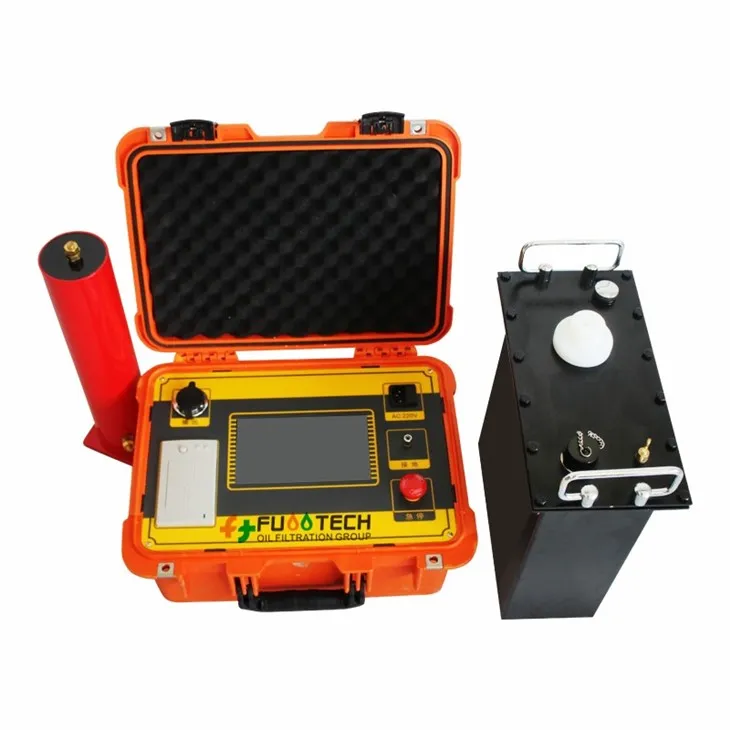
We also have the FUOOTECH Electric VLF30KV 40KV 50KV 60KV 80KV 90KV VLF AC Hipot Tester, which offers a wide range of voltage outputs. This tester is equipped with advanced technology to ensure reliable and accurate testing results.
For high - voltage overhead line testing, our AC 90KV Vlf High Voltage Tester is an excellent choice. It can generate a high - voltage test signal up to 90 kV, which is suitable for testing long - distance and high - voltage overhead lines.
Conclusion and Call to Action
In conclusion, a VLF Hipot Tester can be a valuable tool for testing overhead lines. It offers several advantages such as reduced testing time, better detection of insulation defects, and less stress on the insulation. However, it also has some limitations, and the interpretation of test results requires expertise.
If you are interested in purchasing a VLF Hipot Tester for overhead line testing or have any questions about our products, please feel free to contact us. We are committed to providing high - quality products and professional technical support to meet your testing needs.
References
- IEEE Standard for Field Testing of Shielded Power Cable Systems Using Very Low Frequency (0.1 Hz) Voltage, IEEE Std 400.2 - 2013.
- CIGRE Technical Brochure 496: Very Low Frequency (VLF) Testing of HV Cables.
- Brown, H. E., & Holmes, W. A. (2007). Power System Protection and Switchgear. CRC Press.


