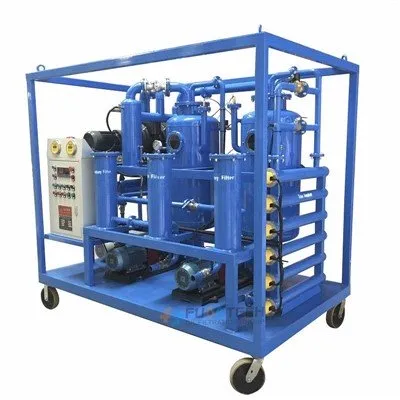

In the industrial and mechanical sectors, maintaining the quality of oil is of paramount importance. Oil purifiers play a crucial role in this process, and they generally come in two main types: manual and automatic. As an experienced oil purifier supplier, I've witnessed firsthand the different applications and performances of these two types, and I'd like to share in - depth insights into their differences.
Working Principle
The core difference between manual and automatic oil purifiers lies in their working principles.
Manual Oil Purifiers
A manual oil purifier operates under significant human intervention. When using a manual oil purifier, the operator has to carry out a series of steps individually. First, the operator needs to assess the oil quality through various means. This could involve visually inspecting the oil's color, noting its viscosity by simple touch - and - feel methods, or using basic tools for oil analysis.
Once the assessment is done, the operator decides on the appropriate purification settings. For example, if the oil is found to be slightly contaminated with large particles, the operator might choose a coarse - filtration setting. However, if there is also a presence of water or fine impurities, additional steps such as switching to a finer filter or activating a water - removal process would be necessary.
The entire process requires hands - on work. The operator starts and stops the machine at the appropriate times. If there are any issues during the purification, like clogging of the filter, the operator must identify the problem and manually take action, such as replacing the filter.
Automatic Oil Purifiers
On the contrary, automatic oil purifiers are equipped with advanced sensors and control systems. These sensors continuously monitor the oil quality throughout the purification process. For example, there could be sensors that detect the water content, particle size, and concentration in the oil in real - time.
Based on the data provided by these sensors, the control system automatically adjusts the purification parameters. If the sensor detects a high water content, the system will increase the power of the water - removal module. Similarly, if it senses a large number of fine particles, it will switch to a finer - filtration mode without any manual input.
Once the purification process starts, the automatic oil purifier runs continuously, with the ability to self - adjust and optimize the purification effect according to the oil's changing conditions.
Efficiency and Productivity
Efficiency and productivity are key factors when choosing an oil purifier, and here the differences between manual and automatic models are quite apparent.
Manual Oil Purifiers
Manual oil purifiers are generally considered less efficient. Due to the need for human intervention at every step, the purification process is often slower. An operator can only handle a limited amount of tasks simultaneously. For instance, when performing a multi - stage purification, the operator has to wait for each stage to finish, assess the results, and then manually set up the next stage. This not only consumes a lot of time but also increases the risk of human error.
In terms of productivity, manual oil purifiers are more suitable for small - scale operations or situations where the oil contamination is relatively stable and simple. For example, in a small workshop where the machinery uses oil with a low and consistent level of contamination, a manual oil purifier can be sufficient. But for large - scale industrial applications, the low productivity of manual oil purifiers can become a bottleneck.
Automatic Oil Purifiers
Automatic oil purifiers are designed for high - efficiency and high - productivity operations. They can run continuously without the need for constant human supervision. The real - time monitoring and automatic adjustment functions ensure that the purification process is optimized at all times. This leads to a much faster purification speed compared to manual models.
In large - scale industrial settings, such as power plants or large manufacturing factories where a large volume of oil needs to be purified regularly, automatic oil purifiers can significantly improve productivity. They can handle a large amount of oil in a short period, reducing downtime caused by oil replacement and maintenance.
Precision and Consistency
The precision and consistency of oil purification are also important aspects to consider.
Manual Oil Purifiers
The precision of a manual oil purifier largely depends on the operator's skills and experience. A well - trained operator may be able to achieve a relatively high level of purification precision. However, there is still a certain degree of variability. Different operators may have different judgment standards and operation habits, which can lead to inconsistent purification results.
For example, when adjusting the filtration parameters, one operator might set a slightly different pressure or flow rate compared to another operator, resulting in differences in the final oil quality. Moreover, human fatigue can also affect the precision of operation over time, leading to a decline in the purification effect.


Automatic Oil Purifiers
Automatic oil purifiers offer a high level of precision and consistency. The sensors and control systems are programmed to follow strict algorithms, ensuring that the purification process is carried out with high accuracy every time. The same set of parameters will be applied under the same oil conditions, regardless of the time or the environment.
This consistency is crucial in industries where strict oil quality standards must be met, such as the aviation and automotive industries. In these sectors, even a slight deviation in oil quality can have serious consequences for the performance and safety of the equipment.
Cost
Cost is an important consideration for any business when choosing an oil purifier, and the cost differences between manual and automatic models are significant.
Manual Oil Purifiers
Manual oil purifiers generally have a lower initial purchase cost. They are simpler in structure and do not require advanced sensors and control systems, which reduces the manufacturing cost. This makes them an attractive option for small businesses or those with limited budgets.
However, the long - term operating cost of manual oil purifiers can be relatively high. The need for human labor means additional personnel costs. Moreover, due to their lower efficiency and potential for human error, there may be higher costs associated with oil re - purification and equipment maintenance.
Automatic Oil Purifiers
Automatic oil purifiers have a higher initial purchase price. The advanced technology and components used in these machines, such as sensors, control systems, and self - adjusting mechanisms, contribute to the higher cost. But in the long run, they can be more cost - effective.
The high efficiency of automatic oil purifiers reduces the time and labor required for oil purification. Additionally, the consistent and high - quality purification results can extend the service life of the oil and the equipment, reducing the frequency of oil replacement and equipment maintenance, which ultimately leads to cost savings.
Applications
The different characteristics of manual and automatic oil purifiers make them suitable for different applications.
Manual Oil Purifiers
Manual oil purifiers are often used in small - scale operations or in situations where the oil purification requirements are relatively simple. For example, in some small garages or workshops, where the amount of oil to be purified is small and the contamination level is not very high, a manual oil purifier can meet the basic needs. They are also suitable for applications where operators have a good understanding of the oil purification process and can make accurate judgments based on their experience.
Automatic Oil Purifiers
Automatic oil purifiers are widely used in large - scale industrial applications. In power plants, for example, a large amount of lubricating oil needs to be purified regularly to ensure the normal operation of generators and turbines. The high - precision and high - efficiency purification capabilities of automatic oil purifiers are essential in this context. They are also commonly used in industries such as aviation, automotive manufacturing, and heavy machinery, where strict oil quality standards must be met.
If you are interested in our oil purifiers, whether it's a manual or automatic model, we offer a wide range of products to meet your specific needs. Check out our Oil Filter Cart With Heater, 1200L/H Lube Oil Recycling Machine, and Phosphate Ester Anti - Fuel Oil Purifier. We are more than willing to discuss your requirements and provide you with the most suitable oil purification solutions. Contact us for procurement negotiations, and let's work together to achieve optimal oil purification efficiency.
References
- “Industrial Oil Purification Technology” by Industry Research Institute
- “Comparison of Manual and Automatic Equipment in Oil Treatment” in Engineering Journal