


Hey there! As a supplier of vacuum oil filter units, I've been getting a lot of questions lately about how to control the temperature of the oil in these units. It's a crucial aspect that can significantly impact the performance and lifespan of the equipment, as well as the quality of the oil being purified. So, I thought I'd take some time to share my insights and tips on this topic.
First off, let's understand why temperature control is so important. In a vacuum oil filter unit, the oil is heated to a certain temperature to reduce its viscosity. This makes it easier for the oil to flow through the filtration system and for the contaminants to be separated more effectively. However, if the temperature is too high, it can cause the oil to degrade, leading to the formation of sludge and other harmful by - products. On the other hand, if the temperature is too low, the oil will be too viscous, and the filtration process will be less efficient.
Now, let's dive into the methods of controlling the oil temperature in a vacuum oil filter unit.
Using a Thermostat
Most modern vacuum oil filter units come equipped with a thermostat. This is a simple yet effective device that allows you to set a specific temperature for the oil. The thermostat constantly monitors the oil temperature and turns the heating element on or off as needed to maintain the desired temperature.
For example, if you set the thermostat to 60°C, once the oil reaches this temperature, the heating element will automatically turn off. As the oil cools down, the thermostat will detect the drop in temperature and turn the heating element back on. This ensures that the oil temperature remains stable within the set range. It's important to choose a high - quality thermostat that is accurate and reliable to avoid over - or under - heating the oil.
Installing a Temperature Sensor
In addition to a thermostat, installing a temperature sensor can provide more accurate temperature readings. A temperature sensor can be placed at different points in the oil circuit, such as at the inlet and outlet of the heating chamber. This allows you to monitor the temperature at various stages of the filtration process.
If you notice a significant difference in temperature between the inlet and outlet, it could indicate a problem with the heating system. For example, if the outlet temperature is much lower than expected, it might mean that the heating element is not working properly or that there is a blockage in the oil flow. By having real - time temperature data from the sensors, you can quickly identify and address these issues.
Controlling the Heating Rate
Another important factor in temperature control is the heating rate. You don't want to heat the oil too quickly, as this can cause thermal stress on the oil and the equipment. A slow and steady heating rate is usually recommended.
Most of our vacuum oil filter units are designed to heat the oil at a controlled rate. You can adjust the power input to the heating element to control the speed of heating. For example, if you're starting with cold oil, you might want to start with a lower power setting and gradually increase it as the oil warms up. This helps to prevent sudden temperature changes and ensures a more even heating of the oil.
Considering the Ambient Temperature
The ambient temperature can also have an impact on the oil temperature in the vacuum oil filter unit. In colder environments, the oil will naturally lose heat more quickly, and you may need to increase the heating power to maintain the desired temperature. Conversely, in warmer environments, you might need to reduce the heating power to avoid over - heating the oil.
It's a good idea to take the ambient temperature into account when setting up and operating the vacuum oil filter unit. You can also insulate the unit to reduce heat loss, especially in cold climates. This can help to improve the energy efficiency of the unit and make it easier to control the oil temperature.

Using a Cooling System
In some cases, you may need to cool the oil down. For example, if the oil temperature gets too high during the filtration process, you can use a cooling system. A simple cooling system can consist of a heat exchanger or a fan.
The heat exchanger works by transferring the heat from the oil to a coolant, such as water or air. This helps to lower the oil temperature quickly and safely. A fan can also be used to blow air over the oil tank or other components to dissipate heat.
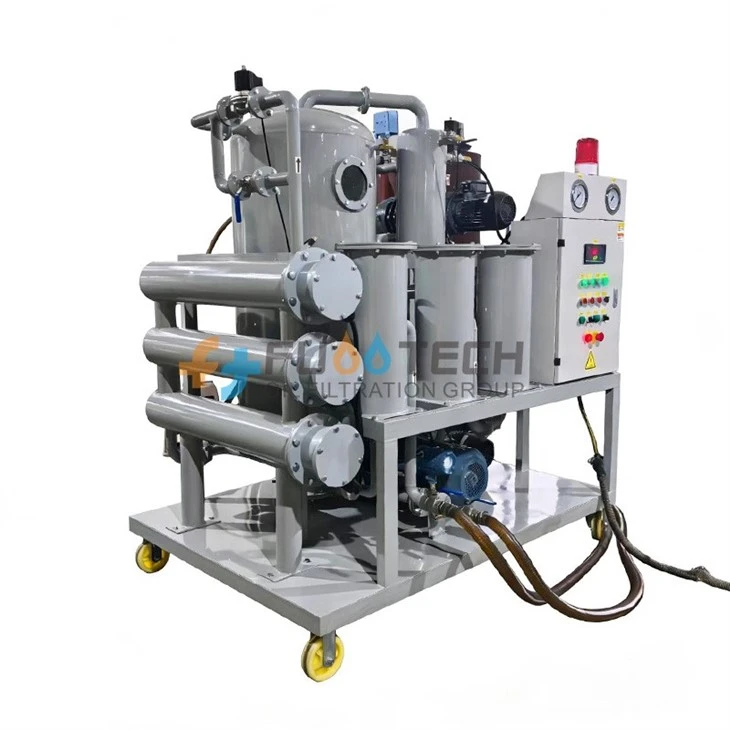
Now, let me introduce some of our great products that are designed with excellent temperature control features. We have the Industrial Oil Purifier, which is suitable for a wide range of industrial applications. This purifier has a precise thermostat and temperature sensors to ensure accurate temperature control.
Another popular product is the ZYD Fully Enclosed Mobile Transformer Vacuum Oil Purifier With Trailer. This mobile unit is very convenient for on - site oil purification. It has a well - designed heating and cooling system to maintain the oil temperature within the optimal range.
We also offer the Mobile Type Single - stage Vacuum Transformer Oil Purifier. This purifier is known for its energy - efficient heating system and reliable temperature control.
In conclusion, controlling the temperature of the oil in a vacuum oil filter unit is essential for efficient and effective oil purification. By using a combination of thermostats, temperature sensors, controlling the heating rate, considering the ambient temperature, and using a cooling system when necessary, you can ensure that the oil temperature is maintained at the optimal level.
If you're interested in our vacuum oil filter units or have any questions about oil temperature control, don't hesitate to contact us for more information and to discuss your specific needs. We're here to help you find the best solution for your oil purification requirements.
References
- "Oil Filtration Handbook" by some well - known author in the industry.
- Technical manuals of our vacuum oil filter units.


