
Can a TTR Tester be used for microwave circuit testing?
As a supplier of TTR Tester, I often encounter questions from customers regarding the versatility of our equipment. One common query that frequently surfaces is whether a TTR (Transformer Turns Ratio) Tester can be used for microwave circuit testing. In this blog, I will delve into the technical aspects of TTR Testers and microwave circuits to explore the feasibility of using a TTR Tester for microwave circuit testing.
Understanding TTR Testers
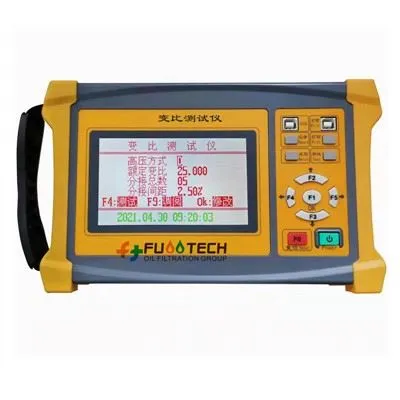
A TTR Tester, as the name suggests, is primarily designed to measure the turns ratio of electrical transformers. The turns ratio is a crucial parameter in transformers, as it determines the relationship between the input and output voltages and currents. By accurately measuring the turns ratio, engineers can assess the performance and integrity of transformers, ensuring their safe and efficient operation.
TTR Testers operate by applying a known voltage to the primary winding of a transformer and measuring the induced voltage in the secondary winding. The ratio of these voltages is then calculated to determine the turns ratio. Modern TTR Testers are equipped with advanced features such as digital display, automatic measurement, and data storage, making them highly accurate and user-friendly. For more information on our TTR Tester products, you can visit Handheld Digital Turns Ratio Test Equipment and TTR Transformer Turns Ratio Tester.


Microwave Circuits: A Brief Overview
Microwave circuits operate at frequencies in the microwave range, typically from 1 GHz to 300 GHz. These circuits are widely used in various applications, including telecommunications, radar systems, satellite communication, and microwave ovens. Microwave circuits consist of various components such as oscillators, amplifiers, filters, and mixers, which are designed to manipulate and transmit microwave signals.
The behavior of microwave circuits is significantly different from that of circuits operating at lower frequencies. At microwave frequencies, the wavelength of the electromagnetic waves is very short, which leads to various phenomena such as skin effect, dielectric loss, and radiation. These phenomena can have a significant impact on the performance of microwave circuits, and therefore, specialized testing techniques and equipment are required to ensure their proper functioning.
Feasibility of Using a TTR Tester for Microwave Circuit Testing
While TTR Testers are highly effective in measuring the turns ratio of transformers, their suitability for microwave circuit testing is limited. The main reason for this is the difference in the operating frequencies and the underlying principles of operation between transformers and microwave circuits.
Frequency Mismatch
TTR Testers are designed to operate at relatively low frequencies, typically in the range of a few hertz to a few kilohertz. This is because transformers are generally used in power distribution and electrical systems, which operate at these frequencies. On the other hand, microwave circuits operate at much higher frequencies, typically in the gigahertz range. The frequency mismatch between TTR Testers and microwave circuits makes it difficult to use a TTR Tester to accurately measure the parameters of microwave circuits.
Different Principles of Operation
Transformers work on the principle of electromagnetic induction, where a changing magnetic field in the primary winding induces an electromotive force (EMF) in the secondary winding. The turns ratio of a transformer is determined by the number of turns in the primary and secondary windings. In contrast, microwave circuits rely on the manipulation of electromagnetic waves at high frequencies, using components such as microstrip lines, waveguides, and resonant cavities. The behavior of these components is governed by different physical laws and principles compared to transformers, and therefore, the measurement techniques used for transformers are not directly applicable to microwave circuits.
Specific Testing Requirements of Microwave Circuits
Microwave circuits have specific testing requirements that are not typically addressed by TTR Testers. For example, microwave circuits need to be tested for parameters such as scattering parameters (S-parameters), which describe the reflection and transmission characteristics of the circuit at different frequencies. Other important parameters include gain, noise figure, and bandwidth. These parameters require specialized test equipment such as network analyzers, spectrum analyzers, and signal generators, which are designed to operate at microwave frequencies and can accurately measure these parameters.
Alternative Testing Solutions for Microwave Circuits
While a TTR Tester may not be suitable for direct testing of microwave circuits, there are other types of test equipment available that are specifically designed for this purpose. Some of the commonly used test equipment for microwave circuit testing include:
Network Analyzers
Network analyzers are the most widely used test equipment for microwave circuit testing. They are capable of measuring the S-parameters of a microwave circuit over a wide range of frequencies. Network analyzers can provide detailed information about the reflection and transmission characteristics of the circuit, which is essential for evaluating its performance and optimizing its design.
Spectrum Analyzers
Spectrum analyzers are used to measure the frequency spectrum of a microwave signal. They can display the amplitude of the signal as a function of frequency, allowing engineers to analyze the frequency content of the signal and identify any unwanted frequencies or interference. Spectrum analyzers are particularly useful for testing the output of microwave oscillators and transmitters.
Signal Generators
Signal generators are used to generate microwave signals with specific frequencies, amplitudes, and modulation formats. They are essential for testing the input and output characteristics of microwave circuits, as well as for simulating real-world signals for testing and validation purposes.
Conclusion
In conclusion, while a TTR Tester is a valuable tool for testing transformers, it is not suitable for direct testing of microwave circuits. The frequency mismatch, different principles of operation, and specific testing requirements of microwave circuits make it necessary to use specialized test equipment such as network analyzers, spectrum analyzers, and signal generators for accurate and reliable testing.
However, as a TTR Tester supplier, we understand the importance of providing comprehensive solutions to our customers. If you have any questions or need further information about our TTR Tester products, or if you are looking for advice on the appropriate test equipment for your specific application, please do not hesitate to contact us. We are committed to providing high-quality products and excellent customer service, and we look forward to the opportunity to discuss your requirements and assist you in finding the best testing solutions.
References
- Pozar, D. M. (2011). Microwave Engineering (4th ed.). Wiley.
- Hayt, W. H., & Buck, J. A. (2012). Engineering Electromagnetics (8th ed.). McGraw-Hill.
- Dellinger, P. A. (2015). Transformer Testing. CRC Press.