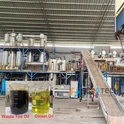


The core purpose of testing the color of petroleum products is to quickly determine product purity, quality stability, and the presence of contamination or deterioration, which serves as a fundamental indicator for quality control and safe application of petroleum products.

The color of petroleum products is directly linked to their chemical composition and refining degree. Testing the color with an oil color tester primarily serves three key functions:
1. Evaluate refining degree: For the same type of petroleum products (e.g., gasoline, diesel, lubricating oil), the depth of color directly reflects whether the refining process meets standards. For instance, high-quality lubricating oil typically has a lighter color (such as pale yellow); if the color is excessively dark, it may indicate incomplete refining, with excessive residual impurities (e.g., sulfides, asphaltenes).

2. Determine product purity and contamination: Normal petroleum products have a relatively uniform and stable color. If the color suddenly darkens, becomes turbid, or shows abnormal hues (e.g., black or brown spots), it may be due to the mixing of impurities (e.g., metal chips, moisture) during production or storage, or accidental mixing with other oil products. Immediate investigation is required to avoid equipment damage.
3. Predict stability and service life: Color changes can also reflect the degree of oxidative deterioration of the product. For example, if the color of lubricating oil darkens rapidly during use, it may be because the oil has oxidized to form harmful substances such as gums and carbon deposits, indicating a decline in its lubricating performance. Timely replacement is necessary to prevent wear on engines or mechanical components.

The commonly used petroleum color standards are Saybolt Color and ASTM D1500 Color Standard. Oil color testers provide a quantitative color grade by comparing the sample with standard color cards/color scales, offering an objective basis for quality assessment.