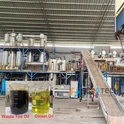


1. The effect of oil quality. Excessive water content in the oil will lead to longer oil demulsification time and poor anti-foaming performance, which will further emulsify the oil and produce emulsions and sludge; on the other hand, water will promote oxidation. The role of the oil reduces the oxidation safety of the oil. After the turbine oil is oxidized, insoluble substances and organic acids are produced, which form colloids and sludge in the bearing channels, oil coolers, filters, and main oil tanks.
2. The emulsion that enters the bearing lubrication system may precipitate water, destroy the normal oil film, increase component friction, and cause local overheating, bearing wear, unit vibration and rust.
3. Severely emulsified oil may be deposited in the speed control and lubricating oil circuit, resulting in poor oil flow in the oil circuit, resulting in unstable oil pressure in the speed control system and drifting of the operating point. When it is too large, normal operation will be affected, and the thermal efficiency of the oil cooler may be reduced, the filters of various parts will be blocked, and the rotor journal will be worn too much.
4. The emulsion will corrode the smooth surfaces of related metal parts such as steam turbine governing system sleeves, bearings and bushings, causing the governing system to jam, load swings, and in severe cases, the steam turbine will be overloaded and the governing security system will fail, resulting in overspeeding of the steam turbine.
5. The turbine oil contains impurities, which increase mechanical wear on the one hand, and cause jamming of the speed control system on the other hand.